2026年7月15日
Strength and hypertrophy: what really matters?
Searching for endless equipment adjustments vs. the right stimulus.


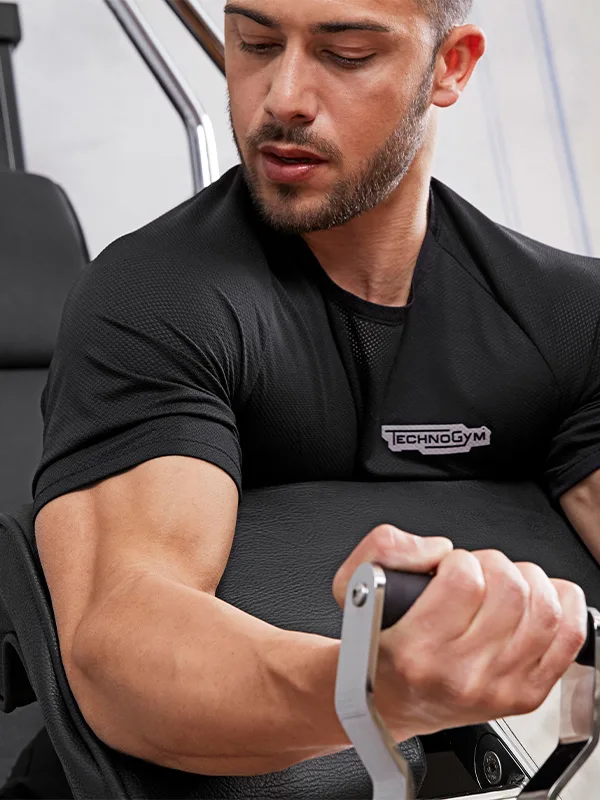
In the world of strength training and hypertrophy, the search for perfection is a constant. Athletes and bodybuilders are continuously looking for the “perfect” training programme and piece of equipment that will adapt to each tiny nuance of their body and maximise every single repetition. But in this race to extreme personalisation, are we perhaps losing sight of the main goal?
The priorities are the right stimulus and proper execution. The effectiveness of a training session, both for strength and hypertrophy, depends not so much on how many exercises you do or what pieces of equipment you use but essentially on:
The priorities are the right stimulus and proper execution. The effectiveness of a training session, both for strength and hypertrophy, depends not so much on how many exercises you do or what pieces of equipment you use but essentially on:
- load (% of the maximum)
- number of repetitions
- total volume (set × repetitions × load)
- recovery
- type of neuromuscular stimulus
In addition, a fundamental principle of biomechanics applied to exercise dictates that every movement has its optimum trajectory for stimulating a specific muscle group safely. High-quality equipment is designed according to this principle, guiding the user through a range of motion scientifically designed to be effective and safe.
An excessive number of adjustments or an over-abundance of machines with trajectories that differ only slightly, although they may seem like an advantage, introduce an element of complexity that becomes counter-productive. The more variables there are, the higher the probability of an incorrect setting, the wrong posture and, consequently, of an execution that is not just less effective, but can also increase the risk of injury.
The search for the "perfect feeling" can easily turn into incorrect execution.
An excessive number of adjustments or an over-abundance of machines with trajectories that differ only slightly, although they may seem like an advantage, introduce an element of complexity that becomes counter-productive. The more variables there are, the higher the probability of an incorrect setting, the wrong posture and, consequently, of an execution that is not just less effective, but can also increase the risk of injury.
The search for the "perfect feeling" can easily turn into incorrect execution.


Muscle hypertrophy: what really matters?
The primary objective for many gym-goers is muscle hypertrophy. Physiology teaches us that hypertrophy is the body’s response to three main stimuli:
The difference between one trajectory and another almost identical one is often irrelevant in terms of tangible results.
On the other hand, the constant progression of load, a suitable training volume and proper recovery are the foundations on which real muscle growth is based. Focusing excessively on micro-adjustments risks taking attention away from what really matters.
- Mechanical tension: This depends essentially on: weight lifted, motor unit activation and movement control.
- Metabolic stress: The classic “muscle pumping” that causes metabolites to build up in the muscle and promotes anabolic signals (of growth).
- Muscle damage: Micro-lesions in the fibres that trigger repair and growth.
The difference between one trajectory and another almost identical one is often irrelevant in terms of tangible results.
On the other hand, the constant progression of load, a suitable training volume and proper recovery are the foundations on which real muscle growth is based. Focusing excessively on micro-adjustments risks taking attention away from what really matters.

A realistic look at extreme results
Finally, it is important to maintain an honest and realistic perspective on the top-level physiques seen in some disciplines. Achieving levels of hypertrophy and exceptional definition is an extremely complex process comprising many factors in which genetics, absolute dedication and an almost perfect diet play a fundamental role.
In many of these contexts, however, the results are significantly influenced by the use of anabolic substances that drastically alter the body’s response to training, making the type of equipment used almost secondary.
Choosing a piece of equipment designed according to biomechanics means prioritising safety, efficiency and lasting results, built on solid foundations rather than illusions.
In many of these contexts, however, the results are significantly influenced by the use of anabolic substances that drastically alter the body’s response to training, making the type of equipment used almost secondary.
Choosing a piece of equipment designed according to biomechanics means prioritising safety, efficiency and lasting results, built on solid foundations rather than illusions.